
As the winter months approach, keeping our homes warm and comfortable becomes a priority. However, with rising energy costs, heating our homes can become expensive. The good news is that there are several simple and effective ways to retain heat in your home, reduce energy consumption and save money on heating bills.
By making a few small changes around the house, you can keep the warmth inside for longer, reduce heat loss and create a cosy environment throughout the winter.
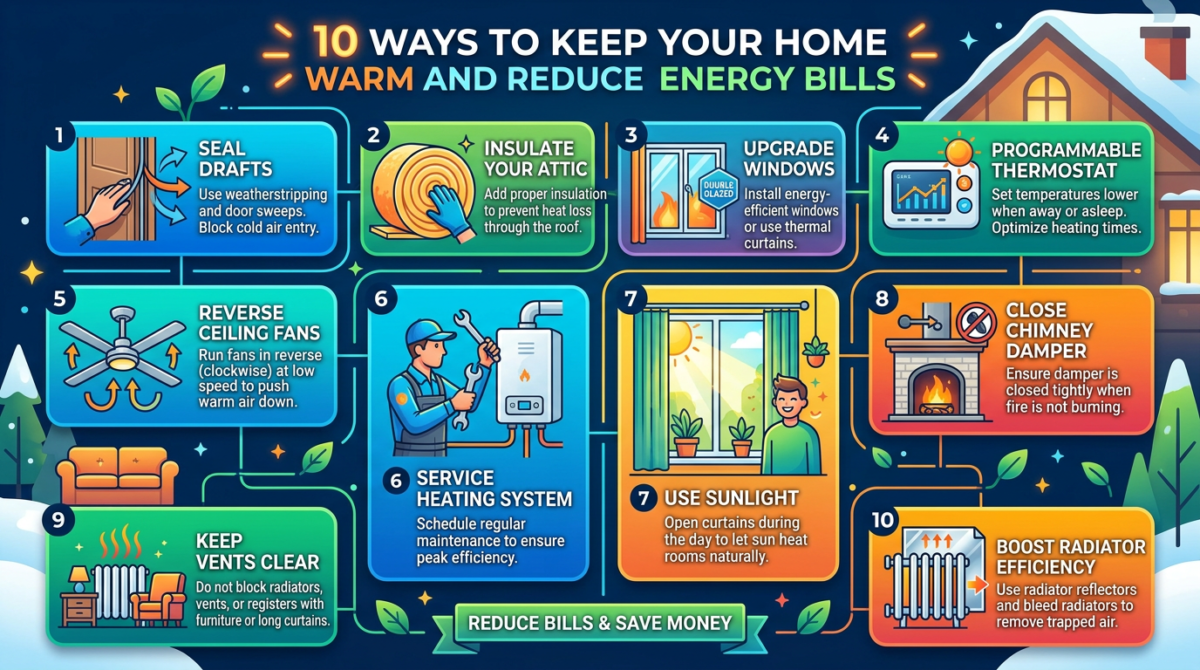
1. Insulate Your Home Properly
One of the best ways to retain heat is to make sure your home is well insulated. A significant amount of heat can escape through the roof, loft, walls and floors.
Loft insulation helps prevent warm air from rising and escaping through the roof. Cavity wall insulation can also reduce heat loss through external walls. If your home has wooden or tiled floors, rugs and carpets can help keep rooms warmer.
Good insulation keeps your home warm for longer and reduces the need to keep your heating switched on.
2. Prevent Draughts Around Doors and Windows
Cold air entering your home through gaps around doors and windows can make rooms feel much colder.
Use draught excluders at the bottom of doors and draught-proofing strips around window frames. Letterbox covers and keyhole covers can also help prevent cold air from entering.
However, remember to maintain adequate ventilation, particularly in kitchens and bathrooms, to prevent condensation and mould.
3. Make the Most of Curtains and Blinds
Curtains are an inexpensive way to help retain heat.
During daylight hours, open curtains on south-facing windows to allow natural sunlight to warm your rooms. As soon as the sun goes down, close your curtains to create an extra layer of insulation and reduce heat escaping through the windows.
Thermal curtains can be particularly effective during colder weather.
4. Use Your Heating Efficiently
Rather than heating your entire home unnecessarily, concentrate on keeping the rooms you use most comfortable.
Set your thermostat to a comfortable temperature and use heating timers so your heating comes on when you need it. Turning the thermostat down by just one degree may help reduce energy consumption.
Avoid heating empty rooms where possible, while making sure that rooms do not become excessively cold and damp.
5. Keep Radiators Working Efficiently
Make sure radiators are not blocked by furniture, curtains or large objects. This allows warm air to circulate freely around the room.
You can also consider installing reflective radiator panels behind radiators on external walls. These help reflect some heat back into the room rather than allowing it to escape through the wall.
Bleeding radiators when necessary can also help them heat your rooms more effectively.
6. Close Internal Doors
Keeping internal doors closed can help prevent warm air from escaping into colder areas of your home.
For example, if you are heating your living room, keeping the door closed helps retain the warmth in that space. This can make your heating system work more efficiently.
7. Use Natural Heat Whenever Possible
Take advantage of natural sources of warmth. Open curtains during sunny periods to allow sunlight to heat your home.
Cooking and baking can also release heat into your kitchen. Once you have finished cooking, you can enjoy the warmth already generated, provided appliances are used safely.
Avoid leaving oven doors open to heat your home, as this is inefficient and potentially dangerous.
8. Reduce Heat Loss Through Floors
Cold floors can make a room feel uncomfortable, even when the heating is on.
Adding carpets, rugs and underlay can help reduce heat loss through floors. If you have wooden flooring, a thick rug can make a noticeable difference to comfort during winter.
9. Check Your Windows
Windows are another common source of heat loss. If you have older single-glazed windows, consider secondary glazing or suitable window insulation film.
These options can help reduce draughts and improve insulation without necessarily replacing all your windows.
10. Maintain Your Boiler and Heating System
A regularly serviced boiler and well-maintained heating system can help ensure that your home is heated efficiently.
Check your boiler pressure according to the manufacturer’s instructions and arrange servicing with a qualified professional.
If you have a modern heating system, make sure you understand how to use its thermostat and heating controls effectively.
Conclusion
Saving energy during winter does not always mean turning your heating off or sitting in a cold home. Instead, it is about making the most of the heat you already produce and preventing it from escaping.
Simple steps such as insulating your home, blocking draughts, closing curtains, using radiator reflectors and managing your heating efficiently can make a real difference.
By retaining heat and reducing unnecessary energy use, you can enjoy a warmer, more comfortable home while keeping your winter energy bills under control.
Remember: The cheapest heat is the heat you don’t allow to escape!